
Whale Watching in Lincoln City: A Front-Row Seat to Nature’s Grand Migration
What sets Lincoln City apart is not a single overlook or park, but the seamless combination of beach access, headlands, and oceanfront lodging that allows whale watching to become a natural, effortless part of your day.
Why the Central Oregon Coast Is One of the Best Places to See Whales
The central Oregon coast is a vital, functional habitat that supports multiple stages of a whale’s life cycle. Each year, thousands of gray whales migrate between Arctic feeding grounds and breeding lagoons in Baja California. The Oregon coast lies directly along this route, placing Lincoln City squarely in the path of both southbound and northbound migrations.
Geography plays a major role here. Rocky headlands, shallow reefs, and strong coastal upwelling bring whales closer to shore, often within visible range from beaches and overlooks. Elevated viewpoints improve visibility by allowing watchers to scan beyond breaking waves and identify spouts more easily.
Beyond the migration seasons, the coast offers consistent viewing due to:
- Summer Residents: A small group of gray whales remains nearshore from May through October to feed, allowing for sightings well into the fall.
- Nutrient-Rich Waters: Coastal upwelling in the spring and summer brings cold, nutrient-rich water to the surface, fueling the growth of prey that whales depend on.
- Underwater Geography: Shallow reefs and rocky headlands concentrate food sources close to the shore, often within visible range from beaches and overlooks.
- Calf Rearing: During the northbound spring migration, mothers often travel closer to shore with their calves for protection, increasing the likelihood of shore-based sightings.
- Whale Watching Weeks: Organized by the Oregon State Parks Department, these special weeks feature trained volunteers to help the public spot and learn about passing whales.
Coastal Viewing from the The Inn at Spanish Head
During peak migration seasons, one of the most overlooked advantages of whale watching in Lincoln City is simply staying in the right place.
The Inn at Spanish Head sits directly on the coastline, offering unobstructed oceanfront views from your room. While every room features floor-to-ceiling windows with direct Pacific Ocean panoramic views, there are select rooms that feature private balconies. For guests in these rooms, whale watching can be as simple as stepping outside with a cup of coffee at sunrise to scan the horizon for spouts. It’s a quiet, front row seat to one of nature’s most incredible journeys, no crowds required.
Sitting above the beach and surf line, The Inn at Spanish Head provides an elevated perspective making it easier to see beyond breaking waves, especially from rooms on the higher floors. These vantage points offer expansive north-to-south views, allowing you to scan a wide stretch of ocean without leaving the comfort of your room. On calm, clear days, guests often notice whale activity simply by taking a few minutes to watch the horizon.
This kind of viewing is especially valuable during cooler months or windy days, when standing on the beach for long periods is less comfortable. Staying at the Inn at Spanish Head offers unique flexibility where you can check the water conditions from your balcony first, then decide if it’s worth driving to other nearby viewpoints.
Lincoln City Beaches and Headlands for Whale Watching
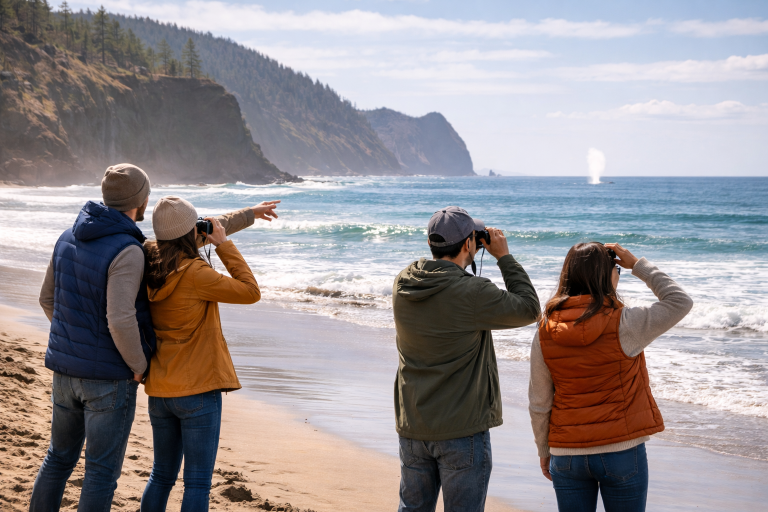
Long beaches, scenic overlooks, and elevated coastal viewpoints allow scanning the ocean without hiking or specialized equipment. Whales are often spotted by watching for vertical spouts or subtle changes in the water’s surface rather than dramatic breaches.
These viewpoints are especially useful during winter and spring migration periods, when whales tend to pass closer to shore.
Whale Watching Near Lincoln City
North of Lincoln City
Areas just north of Lincoln City often provide rocky shorelines and slightly elevated terrain. These features can make it easier to spot whales during migration season, particularly on days with good visibility. Short stops at pullouts or coastal access points are often enough to get a clear view of passing whales.
These northern stretches are less crowded than some well-known hotspots, making them appealing to visitors who prefer quieter viewing.
- Headlands: There are headlands located high on the bank just north of the hotel that provide an ideal vantage point for scanning the migration path.
- Roads End State Recreation Site: Located about four miles north of the Inn At Spanish Head, features a rocky shoreline and small headlands that create excellent conditions for spotting whale spouts. Walking the beach toward the point and stopping frequently to scan the horizon gives watchers multiple angles, which can be especially effective during migration season.
- D River State Recreation Site: Roughly two miles north, this location offers an open beach with wide, unobstructed viewing angles. This location works best on calm days with clear visibility, when whale spouts stand out against the water surface and are easier to spot from beach level.
South of Lincoln City
Just south of Lincoln City, rugged rocky points and shallow reefs create prime whale habitat, where gray whales are often seen close to shore. Rather than chasing every splash, seasoned travelers choose a scenic viewpoint and let the ocean come to them.
Heading south brings you to celebrated whale-watching communities like Depoe Bay, known as the Whale Watching Capital of the Oregon Coast for its excellent shore viewing and boat tours.
Within a short drive of The Inn At Spanish Head, several viewpoints offer exceptional vantage points. Boiler Bay State Scenic Viewpoint, about 10 miles south, is one of the most reliable shore-based spots during winter and spring migrations. Rocky Creek and Otter Crest State Scenic Viewpoints provide higher elevations and wide sightlines that are ideal for spotting distant spouts on clear days. Farther south, Cape Foulweather offers sweeping ocean views that are perfect for scanning the horizon during peak migration.
Depoe Bay: The Whale Watching Capital of the Oregon Coast
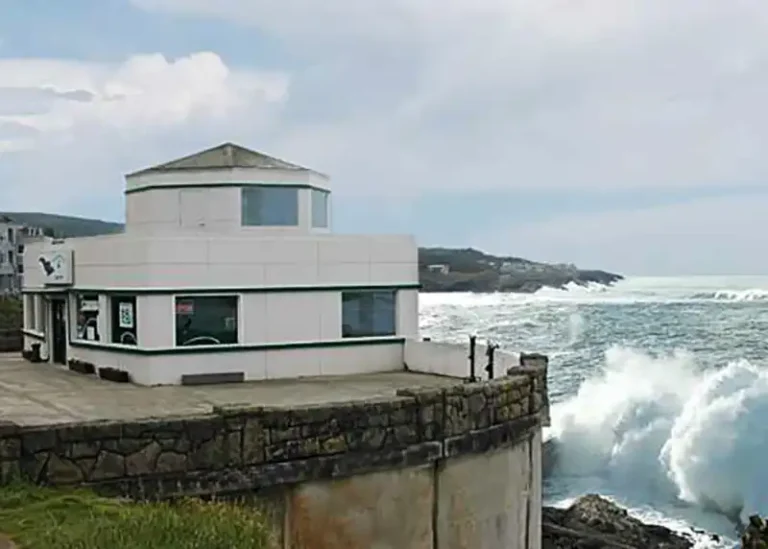
While visiting, stop by the Whale Watching Center, a free Oregon State Parks facility overlooking the bay. It combines an elevated viewpoint with exhibits on whale migration and species identification.
During peak seasons, volunteers help visitors spot whales and understand their behavior, making each sighting more meaningful, especially for first-time visitors and families.
While visiting, stop by the Whale Watching Center, a free Oregon State Parks facility perched on a headland overlooking the bay. It pairs an elevated ocean viewpoint with exhibits that explain whale migration and species identification.
During peak seasons, knowledgeable volunteers help visitors spot whales and understand their behavior in real time, turning a lucky sighting into a more meaningful experience, especially for first-time visitors and families.
When Whales Are Seen on the Central Oregon Coast
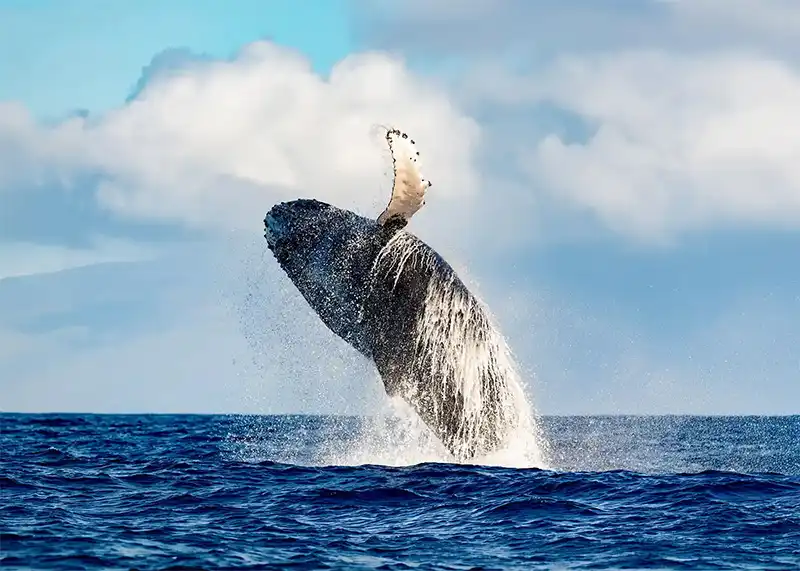
Gray whales are the most commonly seen, migrating south between December and January and returning north from March through May. Some remain nearshore from May through October, allowing for summer sightings. Humpback whales are often spotted from late spring through early fall, typically feeding closer to shore in calmer seas. Orcas may appear at any time of year but are less predictable, while smaller minke whales are occasionally seen from spring through fall.
The Oregon Parks and Recreation Department hosts two annual Whale Watch Weeks during gray whale migrations, with trained volunteers stationed at coastal viewpoints such as the Whale Watching Center in Depoe Bay, Ecola State Park, and Cape Lookout State Park, typically from 10 a.m. to 1 p.m.
Indoor Viewing From Fathoms Restaurant at The Inn at Spanish Head
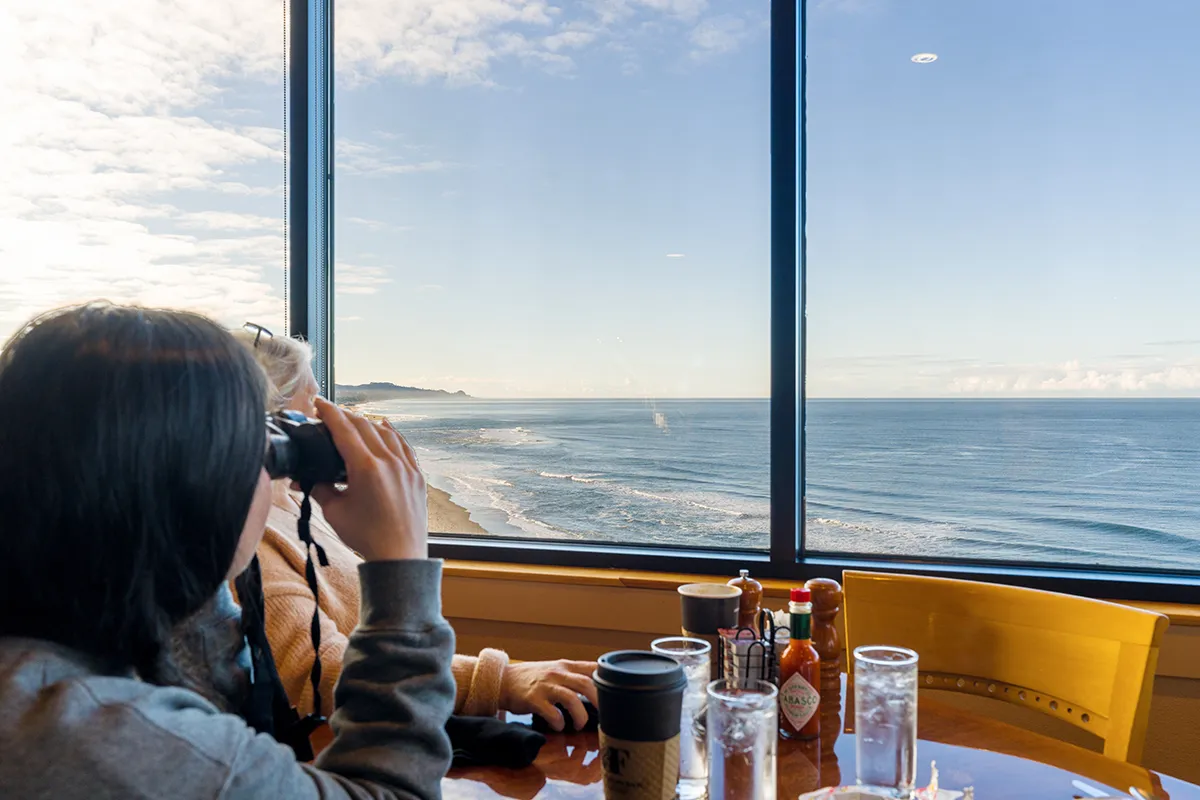
One of the most comfortable and delicious whale watching spots on the Oregon coast is not outdoors at all. Fathoms Restaurant & Bar, located on the top floor of The Inn at Spanish Head, offers elevated ocean views through large windows overlooking the Pacific.
On a clear day, it is entirely possible to spot whale spouts while seated at your table. This is especially appealing during cooler months, when standing outside for long periods is less comfortable.
The restaurant is open all day, making it a perfect spot for breakfast, lunch, or an early dinner with daylight hours, which provides a chance to scan the water while enjoying the view. Guests are encouraged to grab their binoculars and scan the water while enjoying a meal, creating a relaxed and unhurried experience that fits naturally into your stay.
Your Coastal Adventure Awaits: Seize the Season
Lincoln City benefits from this convergence. Its location along the migration path, proximity to productive nearshore waters, and elevated coastal perspectives all contribute to consistent viewing opportunities.
From the private balconies of a coastal resort to the rugged headlands of Depoe Bay, the Oregon coast provides an unparalleled connection to the majesty of the Pacific. The unique alignment of ocean currents, migration routes, feeding ecology, and coastal geology ensures that patient observers are consistently rewarded.