
Fall on the Central Oregon Coast
Fall doesn’t arrive all at once on the Central Oregon Coast.
It begins quietly. September can still carry the ease of summer, with beach walks stretching into the afternoon and clear moments inviting one more stop along Highway 101. The greens return and deepen with occasional fall rain. Mushrooms appear among ferns and fallen needles. Migrating birds pause along the estuaries, salmon return to coastal rivers, and the Pacific starts to show hints of the powerful season ahead.
By November, the coast feels different again. The light changes more quickly. Waves grow restless. A morning outdoors might give way to an afternoon watching rain sweep across the ocean through a wall of glass.
That movement is what makes fall in Lincoln City so compelling.
Within a short drive of The Inn At Spanish Head, you can move from open beach to quiet estuary, climb through a Sitka spruce forest, watch gray whales from a rocky viewpoint, search the sand for a hand-blown glass float, or simply stay put and watch the weather change over the Pacific.
The season keeps moving. The best fall trips move with it.
Let Fall Set the Pace
The Stages of a Coastal Fall
A fall visit to Lincoln City rewards a little flexibility.
Early in the season, a calm morning might call for Cascade Head, a long walk on the beach, or a drive south toward Depoe Bay. A few weeks later, the first sustained rains can transform those same forests and rivers. By late fall, a blustery afternoon may be better spent watching glassblowers at work, lingering over lunch, or seeing the Pacific from somewhere warm.
There isn’t one perfect fall day to recreate. It’s a season of transition, when sunny stretches, misty forests, storm clouds, and post-storm beaches can all become part of the experience. That unpredictability is worth incorporating into your itinerary.
Pack a rain shell. Bring layers. Keep binoculars in the car. Check the tides before walking farther down the beach. Then see what the coast is doing that morning.
Early Fall
Mid Fall
Late Fall
The ocean is still busy
Fall Whale Watching
Fall may feel quieter onshore, but offshore, plenty is happening.
The Central Oregon Coast is an important summer and fall feeding area for resident gray whales. That makes September and October particularly interesting. These aren’t necessarily the large waves of migrating whales many travelers associate with winter and spring. Instead, you may be watching whales that have stayed along the Oregon Coast to feed.
Sometimes all you’ll see is the misty puff of a spout above the water. Other times, a back rolls into view, followed by another. A tail may disappear beneath the surface. Boiler Bay State Scenic Viewpoint, just north of Depoe Bay, offers a broad view over the Pacific and is known for both gray whales and ocean-going birds. The rugged basalt shoreline makes the stop worthwhile even when the whales aren’t cooperating.
You don’t necessarily need to drive anywhere, either. Every guest room at The Inn At Spanish Head faces the ocean through floor-to-ceiling windows, and most have private balconies. A few unhurried minutes watching the horizon in the morning can become part of the day’s routine.
Coffee. Binoculars. Pacific. That’s a pretty good way to start.
Walk the Beach Like You're Looking for Something
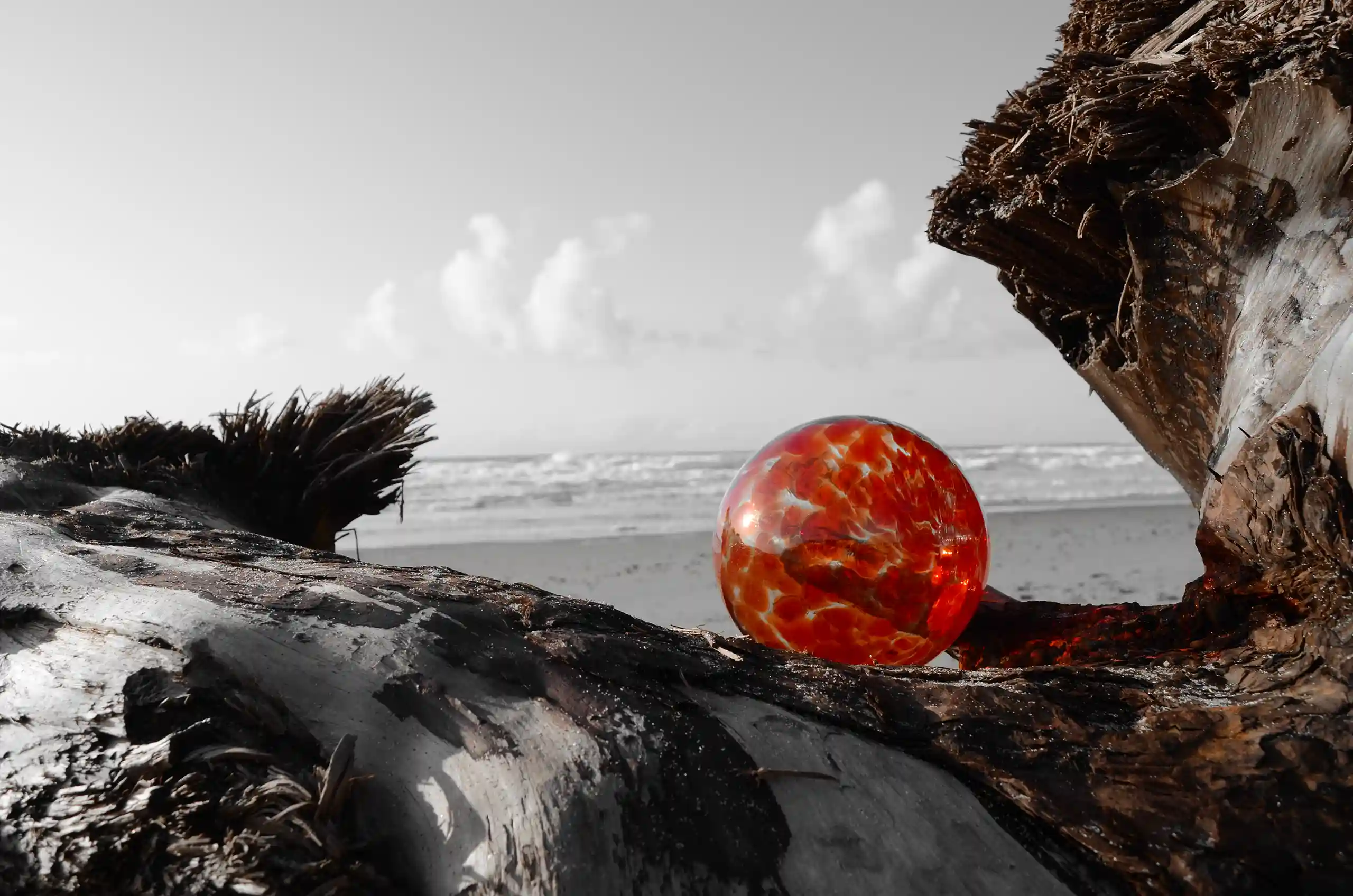
Fall also gives beach walking a little more purpose. Lincoln City’s Finders Keepers tradition places thousands of locally made glass floats along the city’s seven miles of shoreline year-round. The floats are hidden above the high-tide line, waiting to be stumbled upon rather than uncovered in a designated hunting area.
The possibility of finding a glass float can change the way you walk. Driftwood gets a second glance. You scan the edge of the beach. Children suddenly become very interested in inspecting everything. Adults do too.
Even if you don’t find a float, fall beachcombing invites the same kind of attention. Changing surf and seasonal sand movement can uncover rocks, shells, and other natural treasures that weren’t visible on a previous walk. Low tide adds another layer. Rocky areas and tide pools reveal marine life for a few hours before the ocean covers them again. Choose a safe low-tide window and leave enough time to return before the water rises.
On this coast, some of the best experiences are temporary by nature.
Where river meets sea
Bird Watching and Hiking Along Siletz Bay
South Lincoln City changes character around Siletz Bay.
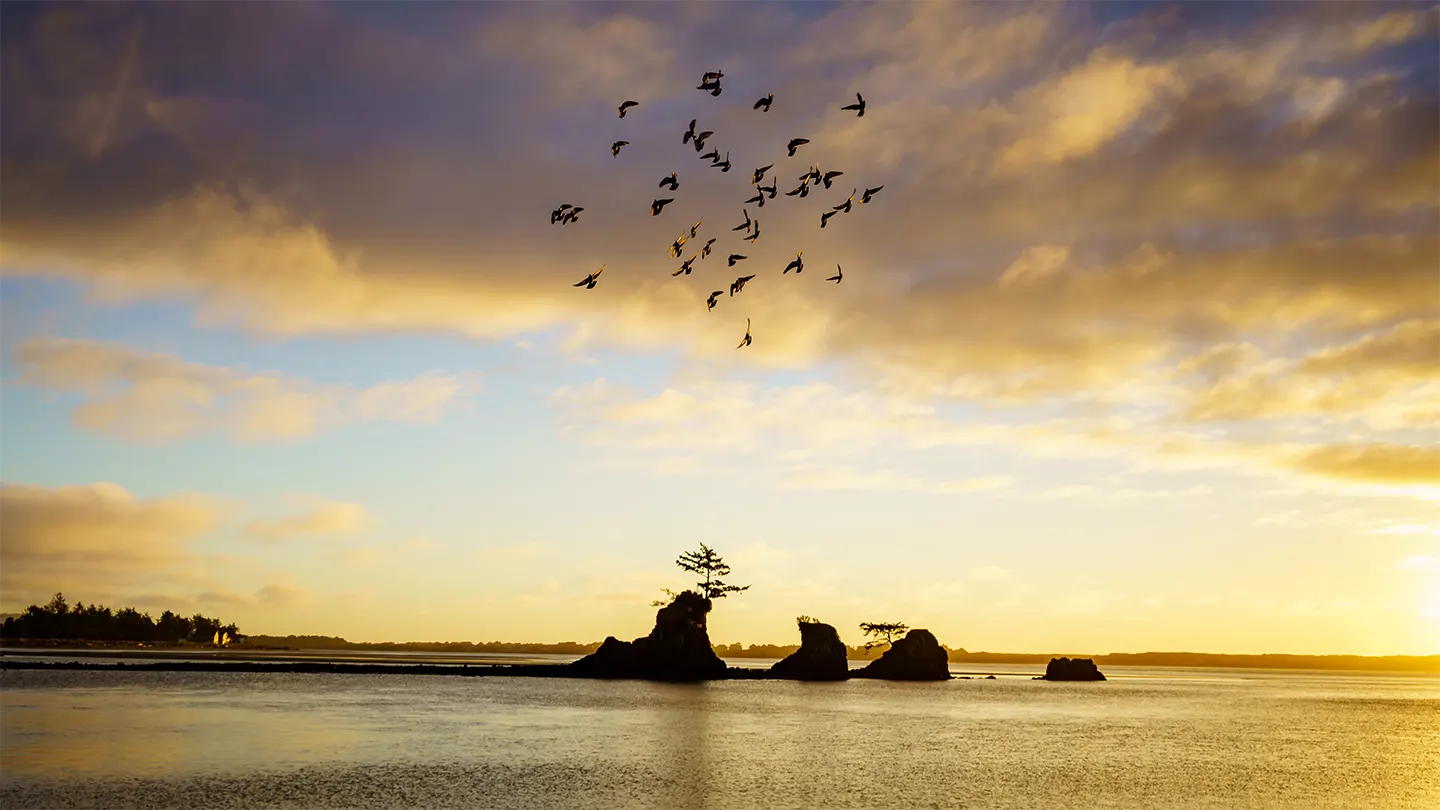
The open Pacific gives way to mudflats, marsh, tidal channels, and sheltered water. It’s a quieter landscape, but during fall it can be one of the busiest ecosystems in the area.
Thousands of shorebirds migrate along the Oregon Coast during fall and use estuaries such as Siletz Bay as places to feed and rest. Shorebird activity is especially notable in early fall, while ducks become increasingly visible as the season progresses. You don’t have to be an experienced birder to enjoy it. Bring binoculars and find a quiet place near the bay. Watch the edges of the water rather than looking only toward the horizon.
For an easy walk, the Alder Island Nature Trail at Siletz Bay National Wildlife Refuge follows the Siletz River and Millport Slough. The relatively short trail makes this a good option when the day’s weather window is brief or when your group prefers something gentler than a headland hike.
This area is a wonderful reminder that the Oregon Coast isn’t just ocean. Here, river, forest, marsh, and sea all meet within a remarkably small space.
Siletz Bay Crabbing & Fishing
Fall rain does more than change the view. Fall Chinook begin entering Siletz Bay in late summer and early fall, with rain helping move fish farther into the river system. The rain hitting your window is part of a much larger coastal cycle linking ocean and river.
For travelers who want a more hands-on experience, Siletz Bay also has one of fall’s most approachable coastal traditions: crabbing.
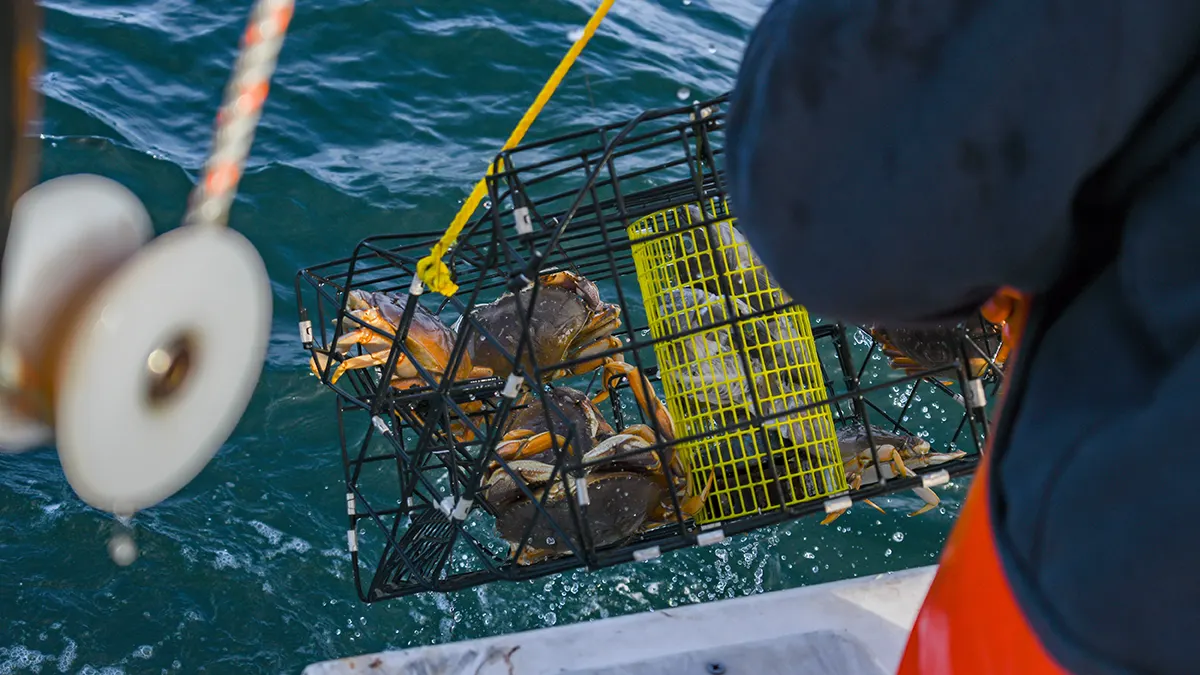
The bay is open to recreational crabbing year-round, but Dungeness crab tends to become more plentiful beginning in September and continuing into winter. It can be a fun family outing, a relaxing way to spend part of an afternoon, or an excuse to simply sit near the bay and see what comes up in the trap.
Obtain A License Before You Fish or Crab
The Oregon Department of Fish and Wildlife requires all persons 12 and older to be in possession of a valid license for fishing and/or shellfishing. If you’re planning to crab, clam, or fish, check current Oregon Department of Fish and Wildlife regulations and shellfish safety notices before heading out. Seasons, limits, and closures can change.
Follow the Rain Into the Forest
Foraging For Mushrooms
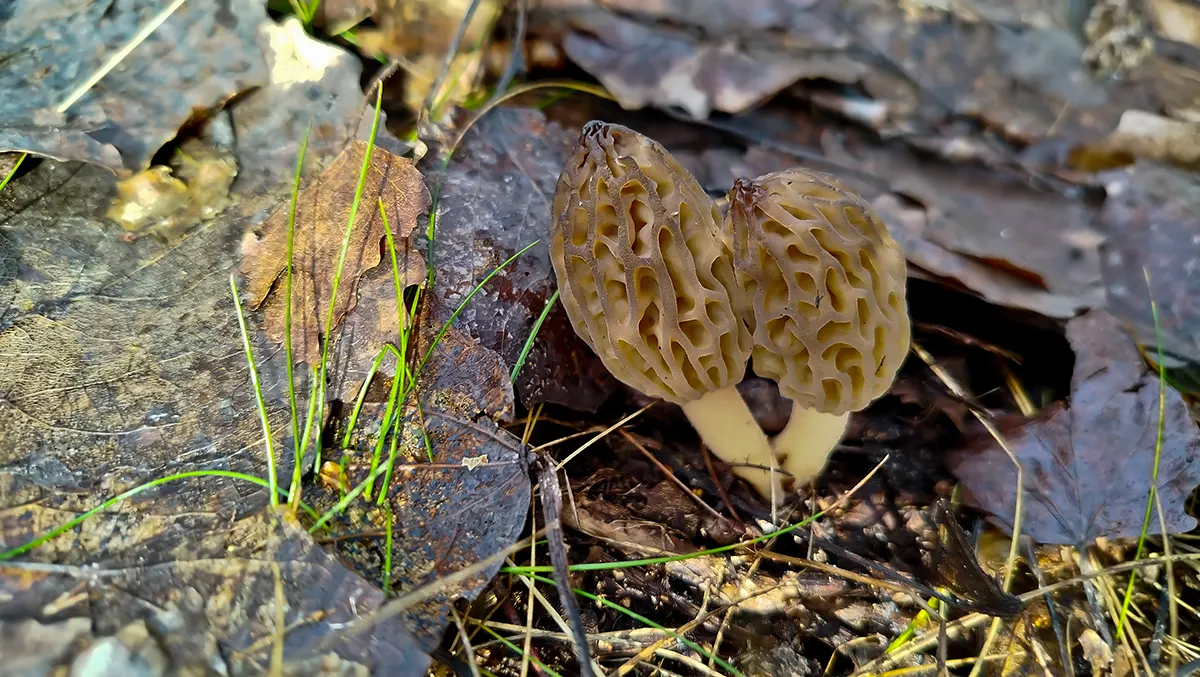
A few miles inland from the beach, rain darkens cedar bark and fallen leaves. Sword ferns glisten. Creeks pick up volume. The forest floor begins filling with shapes and colors that may have been easy to miss during the drier months. This is mushroom season in the Pacific Northwest.
The pleasure is in learning to notice them. Peer beneath shrubbery. Study fallen logs. A simple walk becomes a scavenger hunt for details.
Edible mushrooms in this region include Golden Chanterelles, Hedgehogs, King Boletes (Porcini), Morels, and American Matsutake.
If you’re a beginner, start by observing, photographing, and learning. We recommend the Picture Mushroom: Identifier app to help identify what you find. Wild mushrooms can have dangerous lookalikes, so don’t eat a wild mushroom unless it has been identified by an experienced expert. That doesn’t make mushroom exploration any less exciting. In many ways, it makes it more interesting.
From Rainforest to Headland at Cascade Head
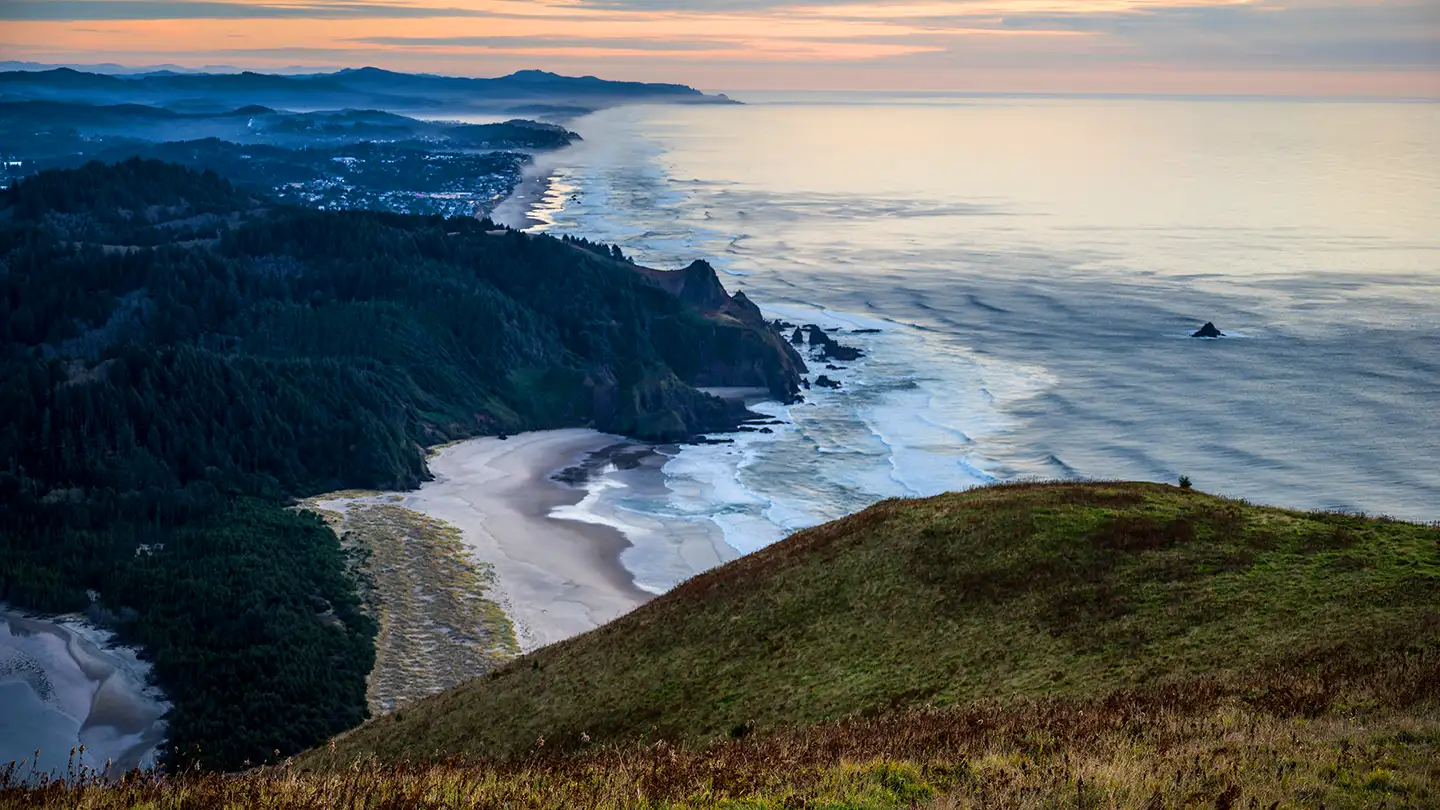
For a more substantial fall outing, head north toward Cascade Head. The lower trail climbs through mature Sitka spruce and western hemlock forest before emerging onto open coastal grassland. From above, the Salmon River estuary spreads below while the Pacific fills the western horizon.
On a clear fall day, the view can feel enormous. On a misty one, the mood changes completely. Both are worth the climb.
The lower route is more vigorous, with steep sections and areas that can become slippery. Always check current trail access before setting out, especially in fall, when rain and temporary closures can affect conditions. The preserve also asks visitors to remain on designated trails and leave plants and fungi where they find them.
If your ideal fall day involves less climbing, stay closer to the beach or spend time along Siletz Bay instead. One of Lincoln City’s strengths is that you don’t need a strenuous hike to feel immersed in the landscape.
Fall weather
The Beginning of Storm Watching Season
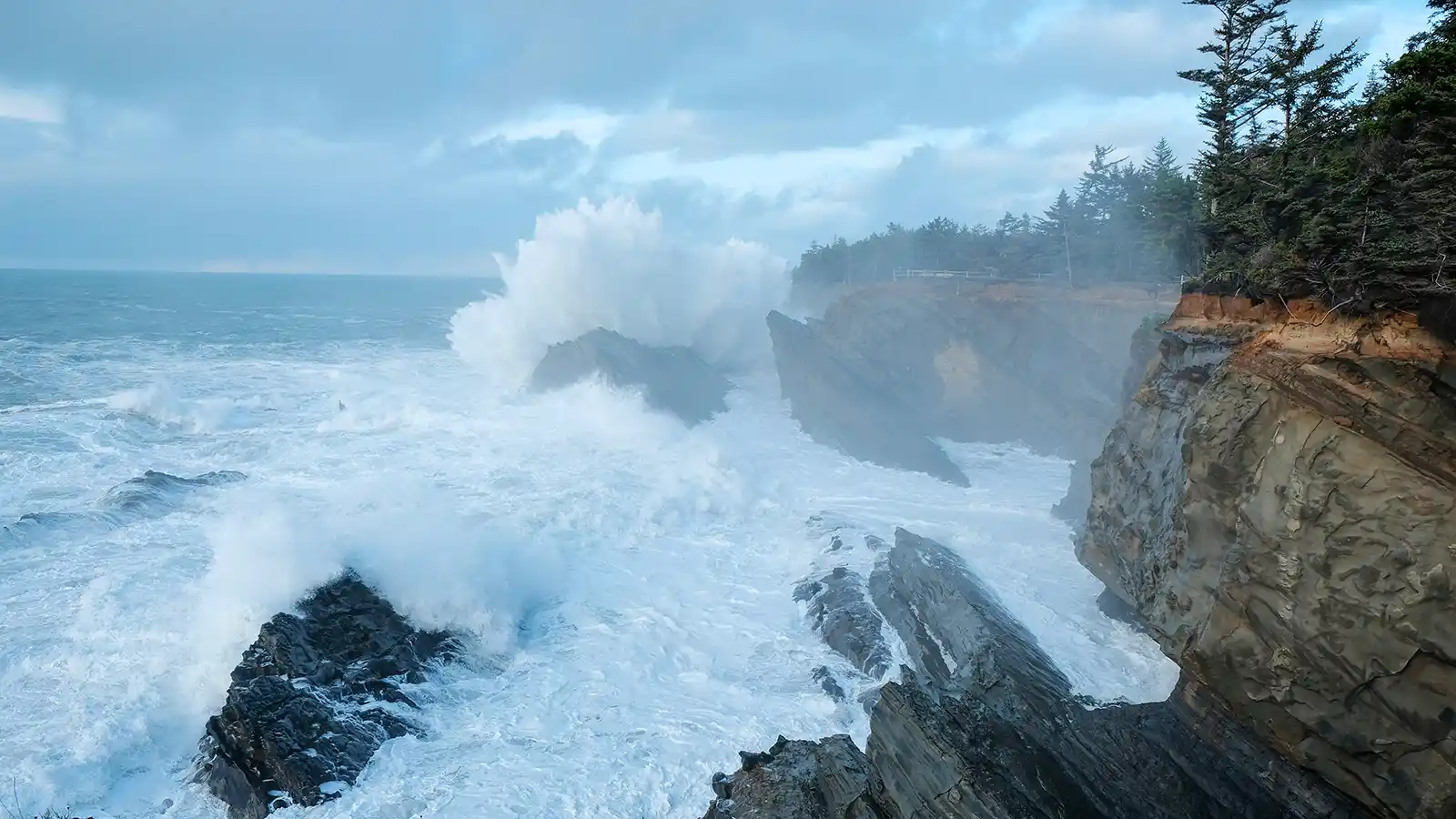
Eventually, fall begins leaning toward winter. The Pacific grows louder. Rain can arrive sideways and disappear just as quickly. Beaches that felt inviting in September can take on a much more dramatic personality in November.
This is where the season becomes especially atmospheric. True peak storm-watching season on the Oregon Coast generally arrives in winter. Late fall, however, begins to offer glimpses of that spectacle as stronger weather systems reach the coast.
You can drive south to Boiler Bay and watch waves meet black basalt from a protected viewpoint. Fogarty Creek State Recreation Area offers a different mood, with footbridges winding through coastal forest before the creek reaches a small cliff-rimmed beach.
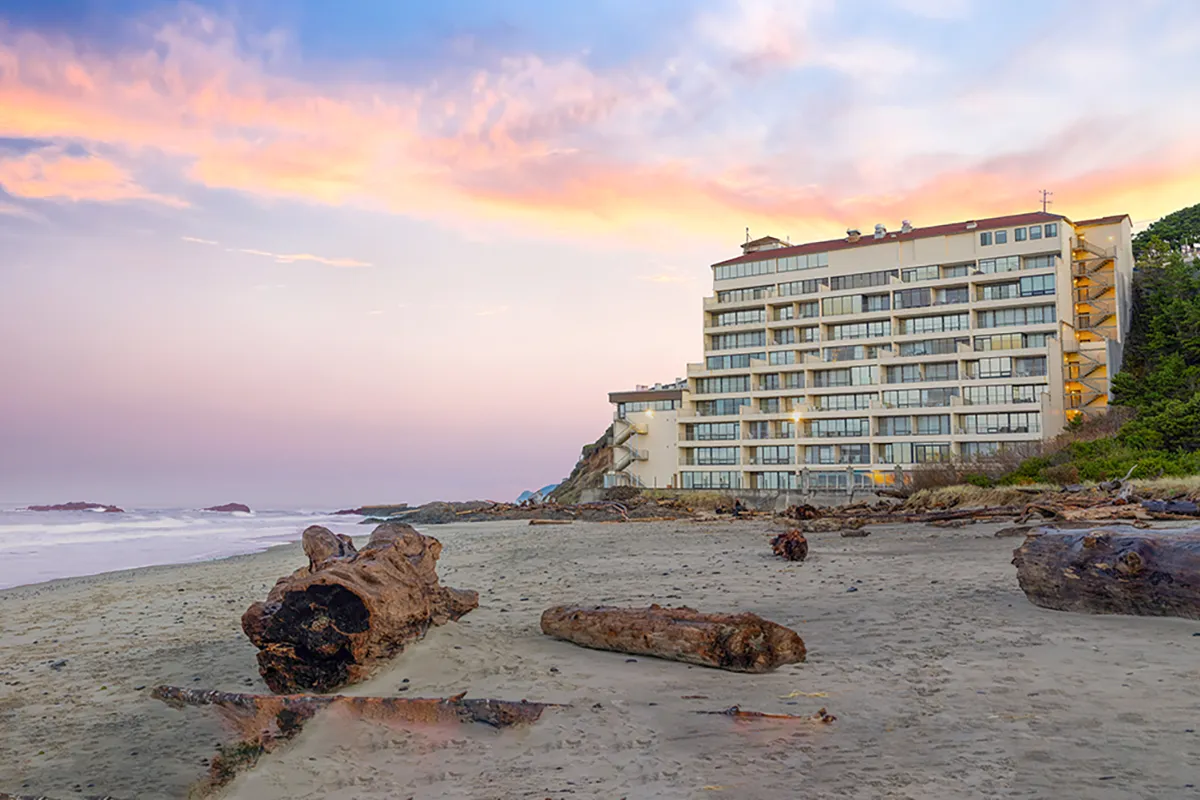
Another option is to watch the ocean from the comfort of your lodgings. At The Inn At Spanish Head, every room has an oceanfront view, and a day of changing weather can unfold outside your windows while you remain warm indoors. Upstairs at Fathoms Restaurant & Bar, the Pacific remains part of the meal. A rainy afternoon or early dinner comes with its own kind of scenery.
Bringing the Coast Indoors
A rainy day in Lincoln City doesn’t have to feel like time lost. In fact, some of the city’s most distinctive experiences happen indoors.
Explore Lincoln City’s Art and Culture
Lincoln City’s modern glass-float tradition grew from the fishing floats that once washed ashore along the Oregon Coast. Today, the Lincoln City Glass Center in the historic Taft District lets visitors watch artists shape molten glass or make a piece of their own with guidance from a glass artist. After spending the morning looking for a Finders Keepers float on the beach, seeing one take shape in the heat of a studio truly completes the story.
There’s something satisfying about this sequence:
- Find the art outdoors.
- See how it’s made indoors.
- Carry a little piece of the coast home.
Add galleries, the North Lincoln County Historical Museum, shops, or whatever is happening at the Lincoln City Cultural Center that week, and a wet afternoon begins to feel just as fun as a sunny day. For families, these stops offer a change of pace after a morning outdoors. For couples or longtime coast visitors, they create permission to slow down.
Fall isn’t asking you to fill every hour. Sometimes coffee, glass art, a long lunch, and another look at the ocean are all you need to relax and unwind.
A Change in Scenery
Adventures Up and Down the Coastline
One of the pleasures of staying in Lincoln City is how quickly the landscape changes when you drive a few miles in either direction.
Roads End, Cascade Head & Neskowin
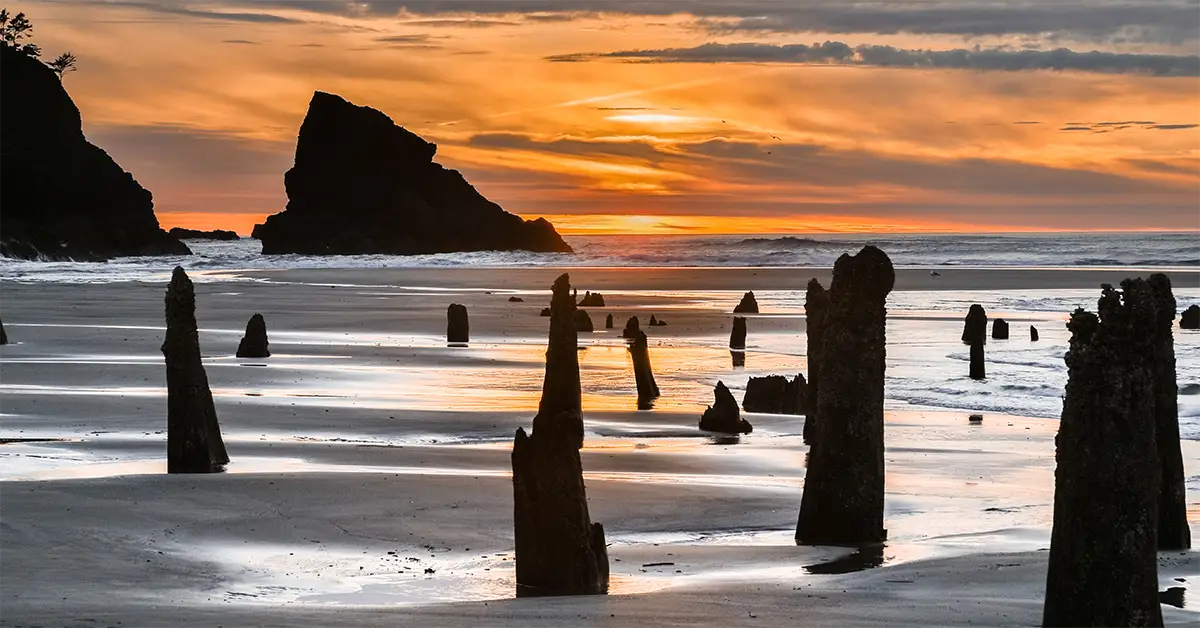
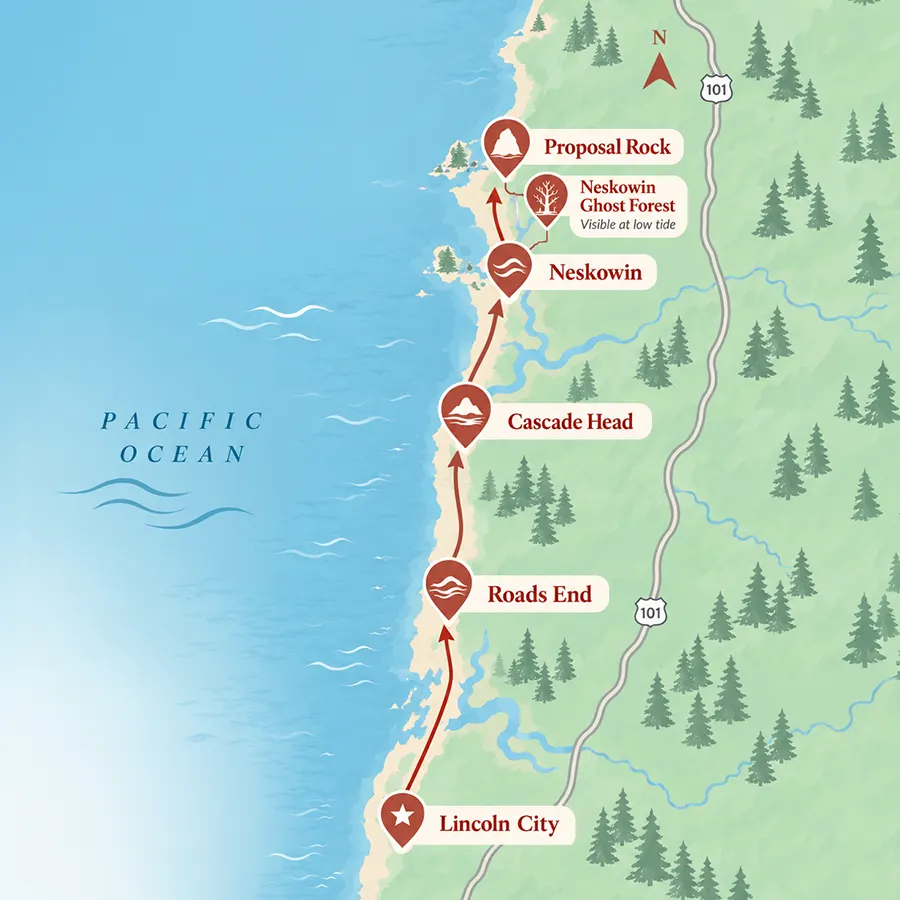
Start with the open beach at Roads End, then continue north toward the forest and headland at Cascade Head. Travel the 101 up and over Cascade Head Pass to Neskowin. Just south of Proposal Rock, remnants of an ancient forest can emerge from the sand and shallow surf at low tide. Seasonal sand movement means the most dramatic exposure can vary, so treat the Neskowin Ghost Forest as a possibility rather than a promise, and check tide conditions before making the trip. Even without the ghost forest, Neskowin’s broad beach and Proposal Rock make the northern drive worthwhile.
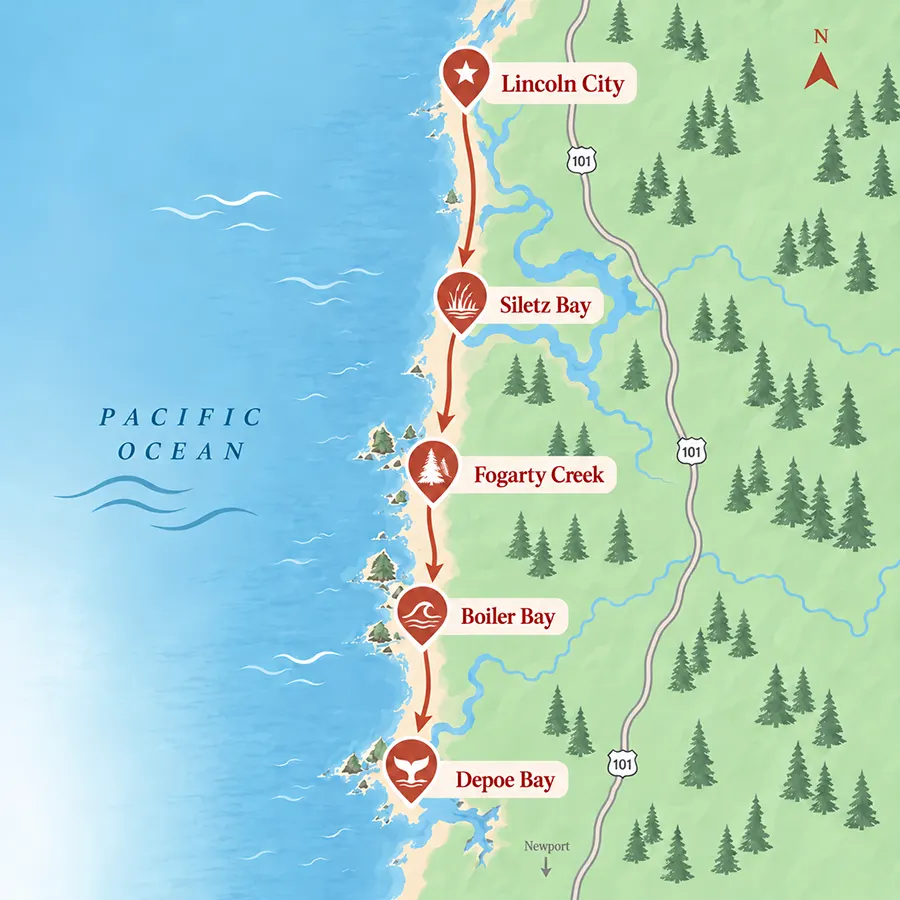
Siletz Bay, Fogarty Creek, Boiler Bay & Depoe Bay
Going south down Highway 101 offers an entirely different sequence. Begin with the calm water and wildlife of Siletz Bay. Continue to the protected cove at Fogarty Creek. A few miles farther, the coastline becomes harder and more dramatic at Boiler Bay before reaching Depoe Bay. Within one short drive, you’ve moved through estuary, forest, sandy beach, and basalt headland. Bring binoculars and leave yourself enough time to stop when something catches your eye. That’s usually where the best part of the drive begins.
A Fall Tradition That Fills the Sky
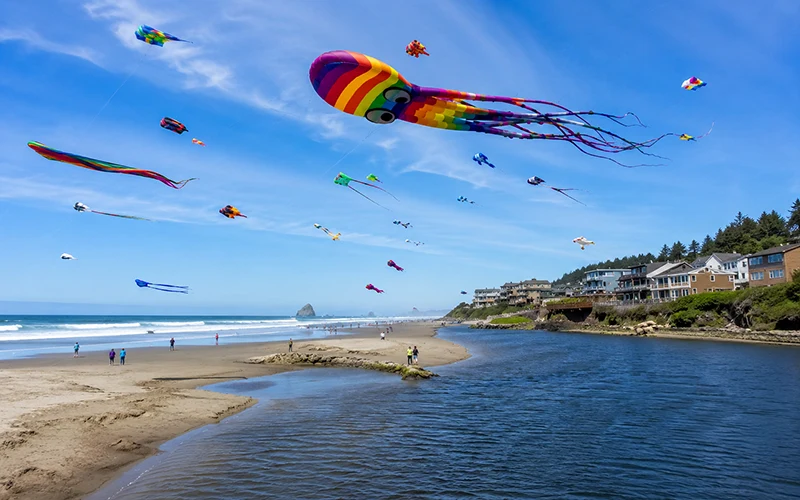
For travelers arriving in early fall, Lincoln City’s annual Fall Kite Festival adds a burst of color to the season. Giant character kites, demonstrations, family activities, and experienced fliers fill the sky during this longstanding Lincoln City tradition. Dates and festival locations can change each year, so check the current event calendar when planning a September trip.
It fits fall here surprisingly well. The wind isn’t something to escape… it’s part of the show.
A Few Things to Know Before You Head Out
Check the Tide Before the Beach
Keep an Eye on the Ocean
Bring Layers, Even on a Beautiful Morning
Pack Binoculars
Look at the Current Conditions
Find Your Fall on the Oregon Coast
Follow the weather. Wander the shoreline. Let the season unfold from the forest to the Pacific. Make The Inn At Spanish Head your oceanfront home base for a fall getaway in Lincoln City.